AV2 2026 Scene Flow Challenge Announcement
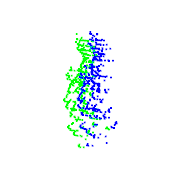
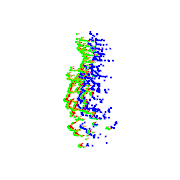
The AV2 2026 Scene Flow Challenge is focused on longer range evaluations (up to 70m) and multi-dataset evaluations that encourage generalization across datasets. As part of this year’s challenge, we are once again using the scene flow evaluation protocol we introduced in 2024.
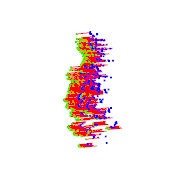
Ground Truth
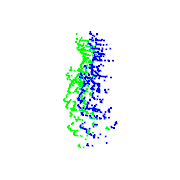
Resources
- Our online leaderboard now with an expanded evaluation range and multi-dataset support.
- Our NEW multi-data anonymized test set.
- OpenSceneFlow, a complete codebase based on training and evaluating scene flow methods on multiple datasets.
Challenge Details
Supervised and Unsupervised Tracks
Our challenge has two tracks: a supervised track and an unsupervised track. If you submit to the unsupervised track, you must submit a method that does not use any of the human labels provided by any of the datasets; however labels from other domains or shelf-supervised methods (e.g. Segment Anything) are allowed as part of developing your method.
CVPR 2026 Workshop on Autonomous Driving Highlighted Methods
For a submission to be considered highlight-eligible at the CVPR 2026 Workshop on Autonomous Driving, must
- Be submitted by May 31st, 2026
- Have a whitepaper (e.g. an arXiv preprint) describing the methodology in a reasonable amount of detail. Methods that are particularly innovative, novel, or suitable for real-world usage may be highlighted with additional recognition outside of the standard leaderboard ranking.
Winning teams will be highlighted in the workshop!
Submission Format
Submissions should be in the form of a zip file containing each sequence’s estimated flow. The details of the format are described in the BucketedSceneFlowEval repository and an automatic creation script is provided as part of the standalone SceneFlowZoo repository.
Citation
If you use our new Bucket Normalized EPE evaluation protocol as part of a publication, please cite I Can’t Believe It’s Not Scene Flow! and if you use the unified dataset training protocol or leaderboard ranking, please cite UniFlow.
@misc{li2025uniflowzeroshotlidarscene,
      title={UniFlow: Towards Zero-Shot LiDAR Scene Flow for Autonomous Vehicles via Cross-Domain Generalization},
      author={Siyi Li and Qingwen Zhang and Ishan Khatri and Kyle Vedder and Deva Ramanan and Neehar Peri},
      year={2025},
      eprint={2511.18254},
      archivePrefix={arXiv},
      primaryClass={cs.CV},
      url={https://arxiv.org/abs/2511.18254}
}

@inproceedings{khatri2024trackflow,
    author = {Khatri, Ishan and Vedder, Kyle and Peri, Neehar and Ramanan, Deva and Hays, James},
    title = ,
    journal = {European Conference on Computer Vision (ECCV)},
    year = {2024},
    pdf = {https://arxiv.org/abs/2403.04739},
    website = {http://vedder.io/trackflow.html}
}
Organizers
The AV2 2026 Scene Flow Challenge is organized by: